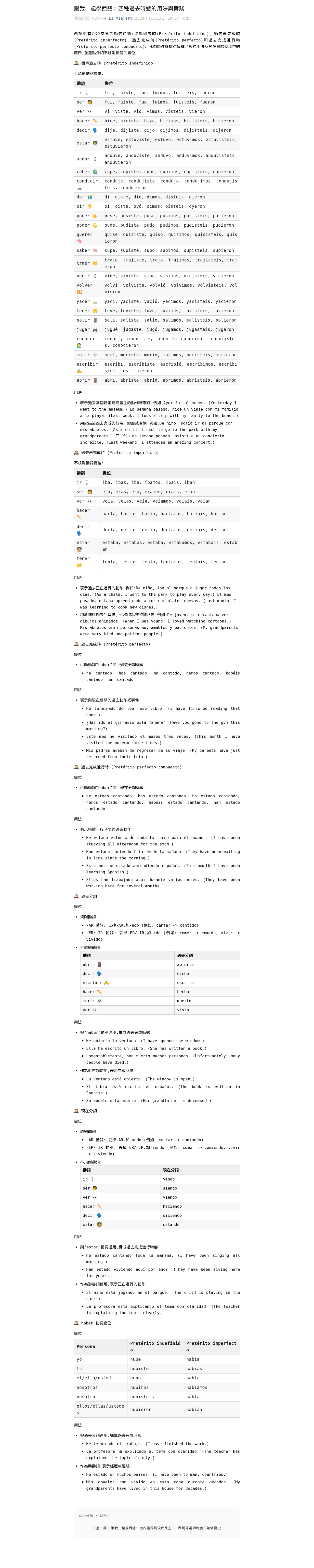
跟我一起學西語:四種過去時態的用法與實踐

发布于 2024-11-13 19:26:57(微信公众号导出记录)。
本文来自公众号后台的“导出文章内容”功能。博客正文由导出长图进行本地 OCR 转写,并保留原始排版图用于逐段核对。
原文链接:查看原文
OCR 转写有效文字约 5565 字;代码、流程图和版式以文末原始排版图为准。
正文(本地 OCR 转写)
西語中有四種常見的逸去時態:單遇去時(Preteritoindefinido)、通去末完成時 (Preterito imperfecto)、返去完成時(Pretérito perfecto)和退去完成進行時 (Preteritoperfectocompuesto)。我們將群细探时每種时慰的用法及其在實察交流中的 愿用,或量贴介绍不规则触词的觉位。 商单過去時(Preterito indefinido) 不规则勤铜聚位: 位 irl fui, fuiste, fue, fuimos, fuisteis, fueron fui, fuiste, fue, fuimos, fuisteis,fueron ser ver c0 vi, viste, vio, vimos, visteis, vieron hacer hice, hiciste, hizo, hicimos, hicisteis, hicieron decir dije, dijiste, dijo, dijimos, dijisteis, dijeron estuve, estuviste, estuvo, estuvimos, estuvisteis, estar estuvieron anduve, anduviste, anduvo, anduvimos, anduvisteis, andar anduvieron cupe, cupiste, cupo, cupimos, cupisteis, cupieron caber conducir conduje, condujiste, condujo, condujimos, condujis teis, condujeron dar di,diste, dio, dinos,disteis,dieron ofr 9 01, ofste,oy6, ofmos, ofsteis, oyeron poner puse, pusiste, puso, pusimos, pusisteis, pusieron poder pude, pudiste, pudo, pudimos, pudisteis, pudieron querer quise, quisiste, quiso, quisimos, quisisteis, quis ieron supe, supiste, supo, supimos, supisteis, supieron saber traje, trajiste, trajo, trajimos, trajisteis, traj traer uoJa venir vine, viniste, vino, vinimos, vinisteis, vinieron volvi, volviste, volvi6, volvimos, volvisteis, vol volver vieron yacer μ yaci, yaciste, yacio, yacimos, yacisteis, yacieron tener tuve,tuviste,tuvo, tuvimos, tuvisteis, tuvieron salir sali, saliste, sali6, salimos, salisteis, salieron jugar jugue, jugaste, jug6, jugamos, jugasteis, jugaron conoci, conociste, conocio, conocimos, conocistei conocer 5, conocieron morf, moriste, muri6, morimos, moristeis, murieron morir escribf, escribiste, escribi6, escribimos, escribi escribir steis, escribieron abrir abri, abriste, abri6, abrimos, abristeis, abrieron 用法:
- 表示退去某個特定時間發生的勐作或事件例如:Ayerfu1al museo.(Yesterday I
went to the museum.) La semana pasada, hice un viaje con mi familia a la playa. (Last week, I took a trip with my family to the beach.)
- 用於描述通去完成的行為、經歷或医例如:De nifo,solia ir al parque con
m1s abuelos. (As a child, I used to go to the park with my grandparents.) El fin de semana pasado, asistf a un concierto increible. (Last weekend, I attended an amazing concert.) 退去未完成時(Preterito imperfecto) 不规则勤韧位: 動詢 位 ir iba, ibas, iba, ibamos, ibais, iban ser era, eras, era, éramos, erais, eran veia, veias, veia, veiamos, veiais, veian ver c0 hacer hacia, hacias, hacia, hacfamos, haciais, hacfan decir decia, decias, decia, decfamos, deciais, decian estar estaba, estabas, estaba, estabamos, estabais, estab an tener tenia, tenfas, tenfa, tenfamos, tenfais, tenfan 用法:
- 表示退去正在进行的勐作 例如:De n1ho,1ba al parque a jugar todos los
dias. (As a child, I went to the park to play every day.) El mes pasado, estaba aprendiendo a cocinar platos nuevos. (Last month, I was learning to cook new (1shes.)
- 用於措述遇去的智情、性格特贴或持状感例如:De joven,meencantaba ver
dibujos animados. (When I was young, I loved watching cartoons.) Mis abuelos eran personas muy amables y pacientes. (My grandparents were very kind and patient people.) 遇去完成時(Preterito perfecto) 整位:
-
由助動词"haber加上通去分词成
-
he cantado, has cantado, ha cantado, henos cantado, habeis
cantado, han cantado 用法:
-
表示與现在相的退去勤作或事件
-
He terminado de leer ese libro. (I have finished reading that
book.)
- Has 1do al gimnas1o esta manana? (Have you gone to the gym th1s
norning?)
- Este mes he visitado el museo tres veces. (This month I have
visited the museum three tines.)
- Mis padres acaban de regresar de su viaje. (My parents have just
returned from their trip.) 退去完成遮行時(Preterito perfecto compuesto) 位:
-
由助動词"haber"加上现在分铜橘成
-
he estado cantando, has estado cantando, ha estado cantando,
cantando 用法:
-
表示持一段時耀的遇去動作
-
He estado estudiando toda la tarde para el examen. (I have been
studying all afternoon for the exam.)
- Han estado haciendo fila desde la maniana. (They have been waiting
in line since the morning.)
- Este mes he estado aprendiendo espanol. (This month I have been
learning Spanish.)
- Ellos han trabajado aquf durante varios meses.
(They have been working here for several months.) 遇去分制 位:
-
规则動:
-
-AR動词:去掉-AR,加-ado(例如:cantar->cantado)
-
-ER/-IR 動词:去掉-ER/-IR,加-ido(例如:comer->comido,vivir->
vivido)
- 不规则動词:
過去分 abrir abierto decir dicho escribir escrito hacer hecho morir muerto ver o visto 用法:
-
與"haber"動速用,杨成遇去完成時態
-
He abierto la ventana. (I have opened the window.)
-
Ella ha escrito un libro. (She has written a book.)
-
Lamentablemente, han muerto muchas personas. (Unfortunately, many
people have died.)
-
作為形容使用,表示完成默態
-
La ventana esta abierta. (The window is open.)
-
El libro esta escrito en espanol. (The book is written in
Spanish.)
- Su abuelo esta muerto. (Her grandfather is deceased.)
現在分词 费位:
-
规则動词:
-
-AR 動词:去掉-AR,加-ando(例如:cantar->cantando)
-
-ER/-IR 動詢:去掉-ER/-IR,加-iendo(例如:comer -> comiendo,vivir
-
> viviendo)
-
不规動词:
現在分词 yendo ir ser siendo ver viendo hacer haciendo decir diciendo estando estar 用法:
-
與”estar"動词速用,横成過去完成進行時服
-
He estado cantando toda la maniana. (I have been singing all
-
Han estado viviendo aquf por afios. (They have been living here
for years.)
-
作為形容使用,表示正在進行的動作
-
El nino está jugando en el parque. (The child is playing in the
park.)
- La profesora esta explicando el tema con claridad. (The teacher
is explaining the topic clearly.) haber動韧發位 變位: Preterito indefinid Preteritoimperfect Persona 0 hube habia yo hubiste tu habias hubo habia él/ella/usted hubimos habiamos nosotros hubisteis habiais vosotros ellos/ellas/ustede habian hubieron S 用法:
-
與通去分速用,杨成遇去完成時態
-
He terminado el trabajo. (I have finished the work.)
-
La profesora ha explicado el tema con claridad. (The teacher has
explained the topic clearly.)
-
作為助動词,表示經歷或經验
-
He estado en muchos paises. (I have been to many countries.)
-
Mis abuelos han vivido en esta casa durante decadas.(My
grandparents have lived in this house for decades.)
西班牙語·目录 <上一篇·眼我一起學西語:古疆馬到现代民主·西班牙遂制度千年演史
原始排版图